What You’re Really Paying for With an Account-Based Marketing Consultant
Learn what an account based marketing consultant does, what ABM consulting costs, how to choose the right expert, and how to measure business impact.
Key Takeaways
An ABM consultant’s job is to help you focus ABM on the right accounts, the right people, and the right plays, with sales and marketing working from the same plan.
A consultant brings specialist expertise and strategic direction, while an agency handles execution, and an in-house team provides long-term ownership.
The scope of ABM consulting can range from a defined strategy project or program audit to embedded support or fractional leadership, depending on the capability gap.
Consulting costs depend on factors such as scope, account volume, ABM maturity, data quality, technological complexity, and the level of hands-on support required.
The right consultant should bring relevant experience, a clear methodology, evidence of commercial impact, and a plan to leave your team stronger than they found it.
ABM should be straightforward. You pick your highest-value accounts, personalize your marketing, and get the sales team involved. But then sales rewrites the account list, marketing launches three campaigns, and nobody can explain which activity moved a deal forward.
B2B purchasing decisions involve several stakeholders with competing priorities, questions, and vetoes. Reaching the right people (and helping them agree) takes a coordinated plan across sales and marketing.
An account-based marketing consultant helps put that plan into practice, bringing specialist expertise to launch, repair, or improve your ABM program. Here’s what they do, how their services work, and how to choose someone who can turn your team’s effort into commercial progress.
What is an Account-Based Marketing Consultant?
An account-based marketing consultant is a specialist who helps B2B companies build, improve, or scale their ABM programs. They guide businesses to make better decisions about their target accounts, strategy, processes, and performance.
A consultant differs from an in-house team because they provide specialized support without becoming a permanent employee. Their role is typically centered on expert know-how, strategy, and capability building rather than the ongoing campaign execution and management you’d get from an agency. Beyond the deliverables themselves, a good consultant should leave the business with a clearer, more effective way to target, engage, and convert high-value accounts.
Everyone’s doing ABM, apparently. But ask companies which accounts matter, who owns them, and how the work turns into pipeline, and suddenly, the room gets very quiet.
An ABM consultant helps address the gaps in account selection, sales coordination, and measurement that stop all that activity from translating into pipeline. Campaigns are going out, ads are spending, and the CRM has names in it, but nobody is seeing actual revenue movement. The point of bringing in an ABM consultant is to fix the underlying revenue engine so your team stops firing blind.
At a high level, you have three ways to structure your resources:
Consultant: Brings specialized expertise, strategic direction, and capability building.
Agency: Supplies external execution, media management, and extra delivery capacity.
In-house team: Provides dedicated organizational ownership and institutional knowledge over time.
Whether you're launching your very first ABM motion or trying to rescue an established program that's stalled out, a consultant can adapt to your maturity stage and introduce lasting improvements to your business.
What Does an Account-Based Marketing Consultant Do?
An ABM consultant helps construct a more focused and coordinated approach to winning high-value accounts. Their level of involvement depends on the agreed scope of work, from strategic advice to hands-on implementation and ongoing delivery. They may advise the internal team, help put the strategy into practice, or stay involved as the program develops. A worthwhile consultant helps the business decide where to focus its ABM resources and how to turn those accounts into opportunities and revenue.
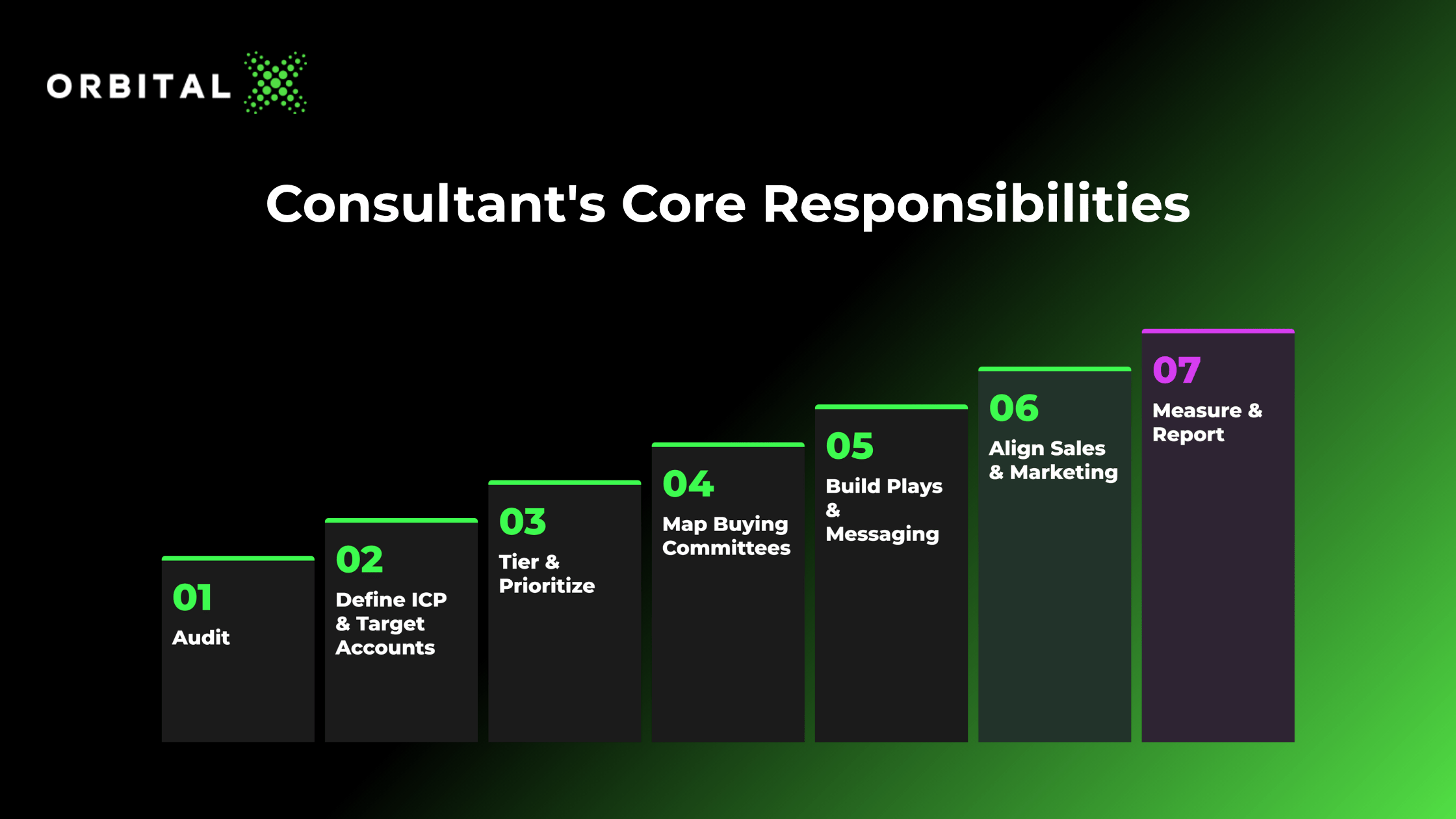 Audit Your Existing Marketing and Sales Setup
A CRM with duplicate accounts, ownerless opportunities, and contacts labelled “DO NOT EMAIL??” can look more like a digital crime scene than a source of sales intelligence. An audit helps establish what’s usable, what needs fixing, and where ABM can realistically add value.
Before changing a single campaign, a consultant reviews your CRM, marketing automation, data quality, existing demand-generation channels, sales processes, account coverage, attribution, and tech stack.
The objective is to spot gaps, duplication, and bottlenecks while uncovering existing strengths you can build on. This audit establishes how ABM will fit into your wider sales and marketing operations.
Define Your ICP and Target Accounts
ABM starts with disciplined account selection. A large total addressable market doesn't mean every company deserves the same investment. A consultant refines your ICP by pinpointing the characteristics of companies most likely to become high-value, long-term clients by looking at industry, size, business needs, tech stack, and commercial fit.
Using that ICP, they help you build a target account list that combines firmographic, technographic, commercial, behavioral, intent, and relationship signals.
Tier and Prioritize Accounts
Ask sales to tier a 1,000-company wish list, and you may discover that every account is apparently Tier 1. A consultant acts as a neutral referee, helping sales and marketing agree on priorities using account value, buying signals, and the resources available. They bring a structured framework and recommend investment levels, while your internal team contributes account knowledge and commercial context. Together, you agree on account tiers:
1:1 (Tier 1): Highly bespoke, deep-dive focus for must-win enterprise accounts.
1:Few (Tier 2): Cluster-based personalization for accounts sharing specific industry pain points.
1:Many (Tier 3): Scaled, programmatic targeting for broader market coverage.
Tiering is what makes ABM scalable. It reserves your most expensive, custom effort for accounts where the commercial return makes absolute sense.
Map Buying Committees
Complex B2B sales don't happen through a single decision-maker. Research from Forrester shows that 73% of B2B purchases involve at least three departments, averaging over a dozen internal stakeholders and almost 10 external influencers.
A consultant helps you map these complex buying groups, identifying economic buyers, champions, technical evaluators, influencers, and potential blockers.
For example, when selling enterprise software, a finance leader evaluates cost and ROI, IT scrutinizes security and integration, and an operational champion focuses on usability. The consultant combines stakeholder research with your sales team's frontline knowledge to map these roles and spot relationship gaps before deals stall.
Build ABM Plays and Messaging
Once the account intelligence is mapped, the consultant helps turn that data into actionable sales and marketing plays. They recommend appropriate channels (such as email, paid media, bespoke content, events, direct mail, and outbound) and define how sales and marketing run them in sync.
Personalization should follow the account tier, with messaging that reflects each account’s challenges and buying situation. A well-planned B2B content marketing strategy helps teams adapt relevant assets for different accounts and stakeholders while reserving bespoke content for the highest-priority opportunities.
Align Sales and Marketing
Marketing says sales never follows up. Sales says the leads are rubbish. RevOps says the data is a mess. By the end of the meeting, everyone has identified someone else’s problem. A consultant helps turn that familiar boardroom stalemate into agreed-on ways of working, covering account ownership, shared priorities, outreach coordination, handoff rules, feedback loops, and common definitions.
According to Gartner, marketing and sales teams collaborate on only 3 out of 15 commercial activities, while 90% of executives report conflicting priorities. However, organizations that share buyer behavior insights are 1.6 times more likely to surpass expected revenue growth.
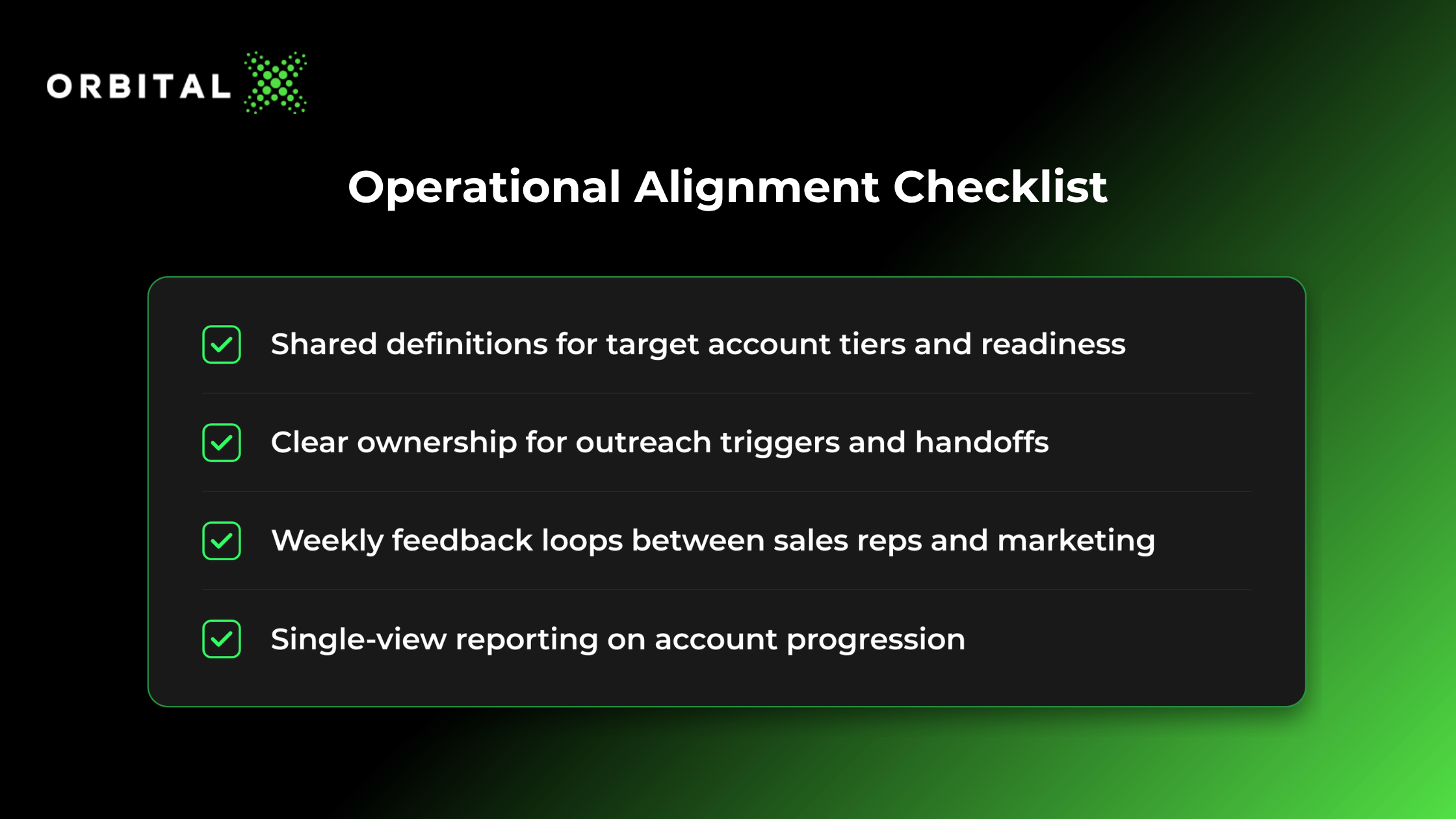 A consultant strengthens sales and marketing alignment by involving sales in account selection from day one and establishing a shared process for reviewing and refining the target account list.
Set up Measurement and Reporting
A consultant helps build a reporting feedback loop rather than a vanity dashboard. They establish metrics that track account momentum, such as account engagement depth, buying committee coverage, opportunity progression, deal velocity, win rates, and pipeline impact. This data helps your team decide which accounts and plays deserve more budget and which should be scaled back.
Types of ABM Consulting Services
Buying ABM support is rarely as straightforward as picking the lunch special. Your team might need a few hours of strategic advice, hands-on implementation support, or ongoing guidance. The right choice depends on the problem you need to solve and how much time and expertise your team can commit.
Consulting can also be combined with agency support when you need additional execution capacity.
Strategy Project | Program Audit | Embedded Consulting | Fractional ABM Leadership |
Defined strategic outcome | Diagnose and improve an existing program | Work alongside the internal team | Ongoing senior-level leadership |
Strategy Projects
A strategy project is a tightly defined engagement built around a specific outcome. It's ideal when you're launching your first ABM program, entering a new vertical, or restructuring an underperforming motion. The result is a practical, usable blueprint rather than a slide deck sitting in Notion. This model works best if your internal team has the bandwidth and execution skills to run the strategy once it's delivered.
ABM Program Audits
An audit acts as a diagnostic tool when your current ABM results aren't matching expectations. Instead of checking whether tasks were completed, the consultant evaluates where the program is falling short. They isolate the highest-priority bottlenecks across data, messaging, routing, and sales follow-up, giving your team a clear list of what to fix, what to stop doing, and where to focus next.
Embedded Consulting
Embedded consulting places the specialist directly alongside your internal team for a set period. Rather than handing over recommendations and leaving, the consultant works through execution decisions with your staff. It's particularly useful during major program builds or when upskilling an internal team. Unlike outsourced execution, the consultant works with your people, ensuring capability stays inside your business when the contract ends.
Fractional ABM Leadership
Fractional leadership provides ongoing, senior-level ABM direction without the expense of a full-time executive hire. It fits companies that have capable execution staff but lack strategic leadership, prioritization, and board-level accountability. The fractional leader sets priorities, guides the revenue team, makes key strategic adjustments, and maintains program momentum over time.
When a business needs both strategic direction and extra execution firepower, consulting can easily be paired with agency services. The consultant provides the overarching strategy, alignment, and capability building, while an agency handles channel management, ad ops, or content production under clear operating boundaries.
ABM Consultant vs. Agency vs. In-House Team
Choosing between an ABM consultant, agency, and in-house team comes down to the gap you need to fill. A consultant brings specialized expertise and strategic guidance, an agency can add external execution and management capacity, and an in-house team provides dedicated ownership and builds knowledge within the business.
These models can also work together. Look at what your business is missing now, what it can support internally, and where you want ownership to sit over time.
Model | Consultant | Agency | In-house |
Primary role | Strategy + expertise | Execution + management | Ownership |
Best for | Capability gaps | Execution gaps | Long-term program |
Engagement | Project/Fractional | Retainer/Project | Full-time |
Builds internal capability | High | Variable | Highest |
Choose a Consultant If...
Your marketers produce brilliant content, your SDRs know how to open doors, and campaigns launch on schedule. Yet everyone is running in five different directions, each convinced they’re heading toward the same goal.
A consultant can help that capable team agree on which accounts to pursue, how to coordinate their efforts, and what success looks like. This model works well when the main gap is strategic direction, specialist ABM expertise, or senior guidance, and your internal team has the day-to-day capacity to put the recommendations into practice.
Choose an Agency If...
An agency fits best when your primary bottleneck is execution capacity or specialized production skills. If your team is too lean to handle campaign management, ad ops, creative production, and outbound workflows on its own, an agency offering ABM services can provide the additional capacity and specialist capabilities your program needs.
Build an In-House Team If...
In-house hires make sense when ABM is your core, permanent go-to-market motion and long-term institutional knowledge is essential. Owning the capability internally requires a serious commitment beyond a single hire. You need dedicated sales participation, modern data infrastructure, execution capacity, and continuous executive support.
How Much Does an Account-Based Marketing Consultant Cost?
There’s no standard price for ABM consulting. What you'll pay depends on the consultant's seniority and expertise, the scope of the contract terms, the complexity of your ABM program, and how much hands-on support you need.
One focus session offering strategic advice will cost less than ongoing support across multiple markets, account tiers, data sources, and sales teams. Likewise, a consultant brought in to advise an experienced internal team will typically have a different scope from one helping a company build its ABM capability from the ground up.
Before comparing quotes, look at what you're buying, not just the total at the bottom. Determine if the proposed engagement gives you the expertise and support needed to solve the problem you're paying to address.
Hourly or Day Rates
Hourly or day rates suit engagements where you need flexible access to specialist expertise rather than a strictly defined deliverable. This works well for advisory calls, executive workshops, strategy reviews, or short-term coaching.
Rates vary depending on seniority, market reputation, and specialization. According to YunoJuno, broader marketing consultant averages sit around £418 per day in the UK and $69 per hour in the U.S. Specialist ABM rates for senior consultants typically command a premium over general marketing benchmarks.
Fixed-Scope Projects
Fixed-scope pricing involves an agreed-upon fee for a defined set of deliverables, timelines, and outcomes. Examples include a full ABM program audit, an ICP refinement project, or building a target account playbook. Fixed fees make corporate budgeting simple, but it's essential to define scope boundaries, client responsibilities, and change-request terms up front.
Monthly Retainers
A retainer provides recurring access to the consultant's expertise for a fixed monthly investment. This structure fits ongoing strategic advisory, regular pipeline reviews, and continuous optimization. Always clarify exact availability, meeting cadences, deliverables, and response SLAs up front so the retainer remains high-value.
Fractional Leadership
Fractional leadership fees reflect ongoing executive-level ownership. Rather than billing by the hour, pricing is structured around defined days per week or month to lead the ABM function, direct teams, and maintain revenue momentum. This provides high-level leadership at a fraction of the cost of a full-time executive salary.
What Affects ABM Consulting Costs?
Building an ABM program on messy CRM data is a bit like building a house on quicksand. You have to lay a solid foundation before anything useful can stand up. Duplicate records, missing contacts, and unreliable account information can add consulting hours before campaign planning even begins. Data quality is one of several factors that shape the final cost:
Scope: A narrow audit costs significantly less than building an end-to-end ABM engine.
Consultant Seniority: Experienced practitioners with proven track records command higher fees.
Account Volume: Managing strategy across thousands of Tier 3 accounts requires different systems than a 10-account Tier 1 play.
ABM Maturity: Starting from scratch requires more foundational work than tweaking an active program.
Data Quality: Messy, incomplete CRM data requires significant clean-up before outreach can begin.
Tech Complexity: Integrating multiple CRM platforms, intent tools, and marketing platforms increases scope.
Market Geography: Multi-region or multi-language campaigns add research and coordination complexity.
Execution Level: Advisory-only work costs less than hands-on implementation and team coaching.
How to Choose an Account-Based Marketing Consultant
The right ABM consultant should understand your commercial goals and offer an approach that fits your team’s capabilities and resources. Choosing one means assessing both the expertise they bring and how effectively you work together.
Look for Relevant Experience
Look beyond generic credentials or impressive logo slides. Check if the consultant has worked with companies of your size, business model, deal complexity, sales cycle length, and ABM maturity. They don't need to come exclusively from your exact niche, but they have to understand your commercial realities.
Ask for Pipeline-Focused Case Studies
Demand proof of commercial impact, not vanity metrics. Ask prospective consultants for case studies that explain the initial problem, strategic approach, timeline, target account list, and actual results in qualified pipeline, deal progression, and closed-won revenue. Make sure to ask what the consultant personally delivered versus what was handled by internal teams.
Understand Their Data Methodology
Your ABM strategy is only as good as the account data behind it. Ask how the consultant sources, validates, and enriches account and contact information. How do they track intent signals, handle missing contact info, and maintain database hygiene? You want a reliable methodology that leads to confident account decisions.
Ask How They'll Involve Sales
Sales participation is a deal-breaker. Ask the consultant specifically how and when they involve sales reps in account selection, research, message development, and signal follow-up. If a consultant designs an ABM strategy in isolation and hands it over to sales at the end, walk away.
Clarify Deliverables and Ownership
Establish exact responsibilities before signing. Define who owns strategy, copywriting, data enrichment, tech configuration, meeting scheduling, and reporting. Ensure there are no gray areas about where the consultant's job ends and your internal team's work begins.
Agree on KPIs up Front
Define success metrics before any work starts. KPIs should align directly with your engagement goals, such as target account coverage, engagement rates, sales acceptance, pipeline creation, and deal velocity. Clarify which metrics the consultant directly influences and which are owned by your sales team.
Plan for Knowledge Transfer
A great consultant leaves your business stronger than they found it. Ask how they plan to transfer knowledge to your internal staff through documentation, playbooks, workshops, and coaching. You're paying to build internal capability, not to create permanent dependency.
Red Flags to Watch for
If the first recommendation is a £100,000 platform and nobody has asked how your sales team works, keep your wallet closed. A consultant should be able to explain which problem the technology will solve, why it’s needed, and how your team will use it. That same scrutiny applies to the rest of their approach:
Vanity-Metric Reporting: Promising success based on clicks, impressions, or MQL volume without connecting activity to account progression or revenue.
Tech-First Thinking: Insisting you buy expensive software platforms before fixing your account strategy, data, and messaging.
No Clear Account-Selection Methodology: Failing to explain logically why specific accounts belong on your target list.
No Sales Involvement: Designing campaigns without direct input and feedback loops from sales reps.
Generic Strategy Decks: Delivering recycled presentation decks that aren't tailored to your market or commercial realities.
Guaranteed Pipeline Promises: Claiming guaranteed revenue numbers, ignoring external factors like deal cycles, market conditions, and sales execution.
How Should You Measure the Performance of ABM Consulting?
Gauging the success of ABM consulting requires looking beyond whether the consultant completed the agreed-upon work. The real test is if the program is improving your ability to engage the right accounts and generate revenue from them.
A useful way to measure that progress is to move from target accounts to engaged accounts, buying committees, pipeline, and revenue.
Not every engagement will produce revenue immediately though, particularly when sales cycles are long. Early-stage indicators can show whether the program is moving in the right direction, while later-stage measures should increasingly connect ABM activity to pipeline and revenue.
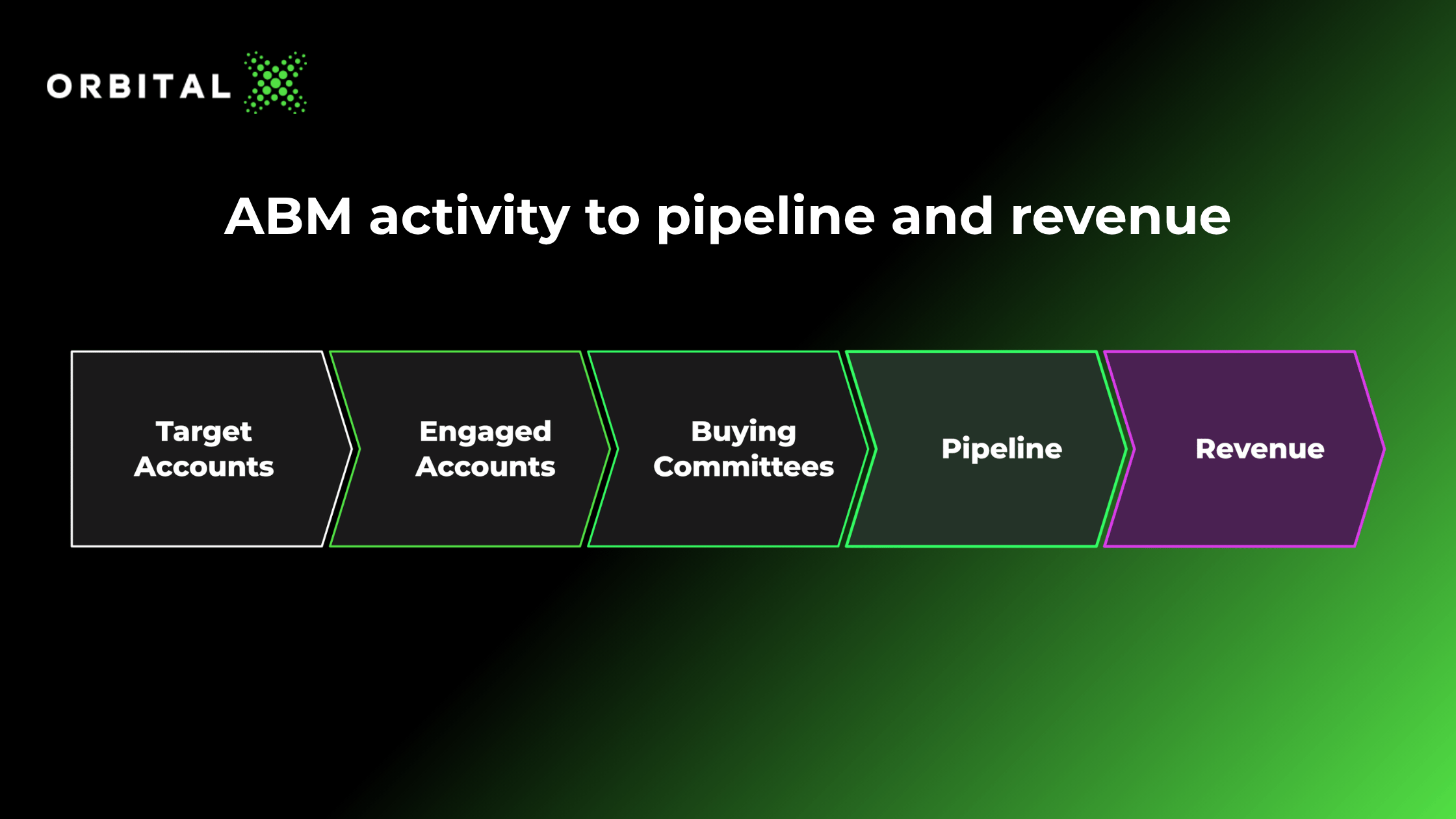 Target Accounts
Measurement begins with list quality. Evaluate whether you’re targeting the right accounts rather than building the largest list. Track ICP fit accuracy, account data completeness, coverage within your total addressable market, and how effectively the list is maintained over time.
Engaged Accounts
Track whether target accounts show meaningful interactions across marketing and sales touchpoints. Measure engaged-account rates, interaction depth, and account-level activity trends. Look for sustained interaction from relevant target companies rather than individual, isolated clicks.
Buying Committees
Because B2B deals involve multiple stakeholders, track how engagement spreads across decision-makers. Measure buying committee coverage, the number of engaged contacts per account, and stakeholder penetration across economic, technical, and user roles. Broad stakeholder engagement is a strong indicator of deal momentum.
Pipeline
Shift focus from engagement to commercial progress. Measure target-account pipeline created, sales-accepted opportunities, opportunity progression rates, and deal velocity. Track how quickly accounts move through funnel stages compared to non-ABM baselines.
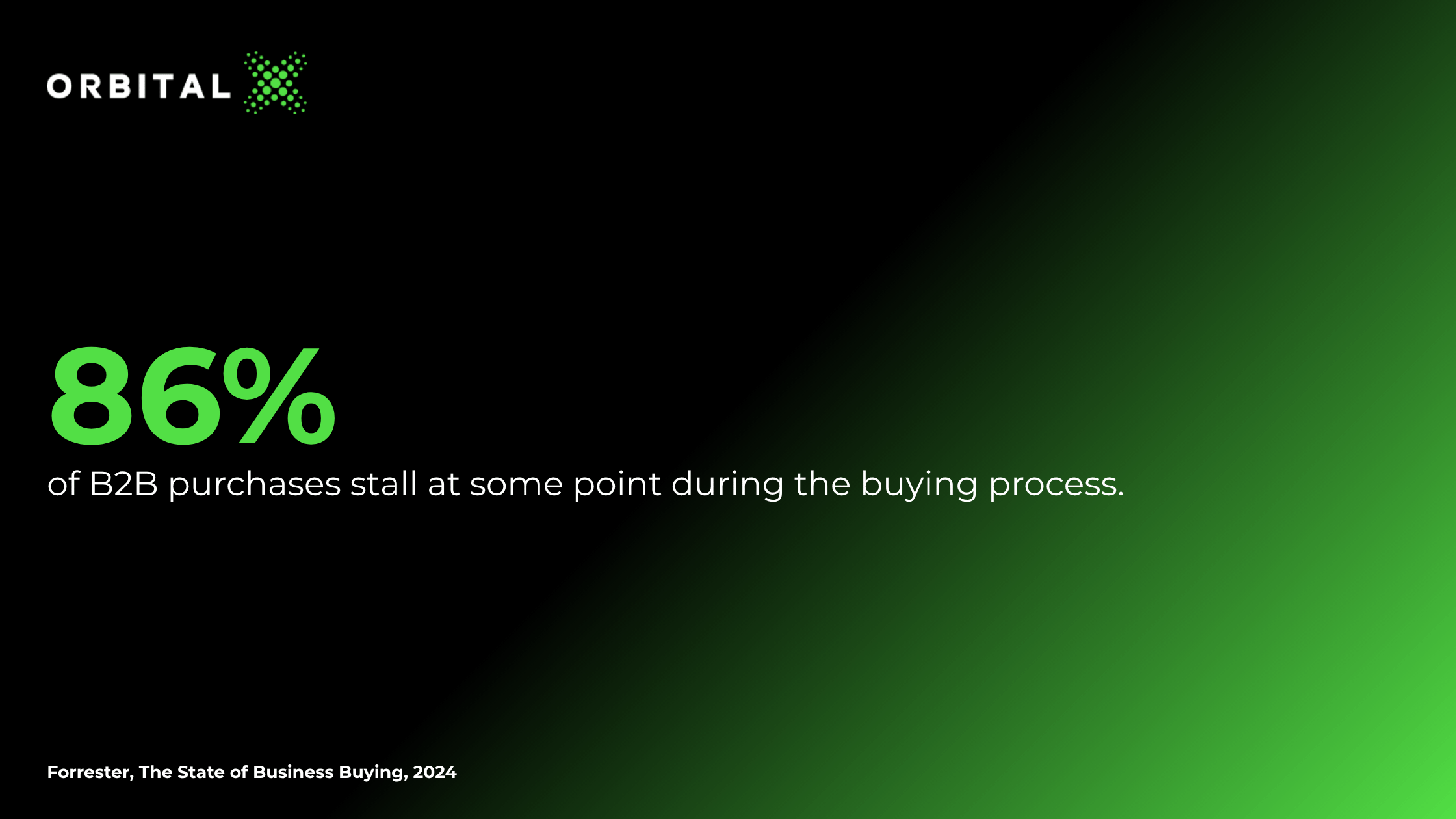
As Forrester noted, 86% of B2B purchases stall at some point. Tracking B2B marketing metrics such as pipeline progression and deal velocity helps you identify where accounts are slowing down and where additional support may help them move forward.
 Revenue
 is the ultimate proof of ABM impact. Key metrics include closed-won revenue from target accounts, win rates, average deal values, and account expansion. Because enterprise sales cycles take time, evaluate early pipeline progress alongside long-term revenue realization.
From ABM Strategy to Cold, Hard Revenue: What a Good Consultant Should Leave Behind
The consultant has left. The invoice is paid. Can your team actually run the program, or does everyone need another workshop to explain the workshop?
Good ABM consulting earns its keep through the capabilities your business gains:
A target-account strategy backed by data, with a clear reason for every priority.
A repeatable ABM playbook your team can use without its author narrating every slide.
Sales and marketing working from the same plan and actually following through.
Account-level measurement that shows where deals move, stall, and turn into revenue.
Internal teams equipped to run, question, and improve the program.
Once the work wraps up, your team should make sharper decisions, coordinate more effectively, and know what to do next. Choose the support that addresses your actual growth bottleneck, with responsibilities and a handover plan agreed-on up front.
At OrbitalX, we believe ABM consulting should leave your business better equipped to generate revenue long after the final meeting. The playbook should get more use than the farewell deck.
Ready to give all that marketing activity a commercial purpose? Book a call with the OrbitalX team.
FAQs
How long does ABM consulting take to show results?
ABM consulting can take anywhere from a few weeks to several months, depending on what you need. A focused audit or strategy project may be completed in a few weeks, while building a new ABM program or working alongside your team can take a quarter or longer. Ongoing or fractional consulting doesn't have a fixed end date.
Can startups work with an account-based marketing consultant?
Yes, if a startup has a clear ICP, a defined sales motion, and a relatively small number of high-value prospects. An ABM consultant can help a lean team focus its limited resources on the accounts most likely to become customers. That said, if the company is still figuring out its market, product-market fit, or ideal customer, broader demand generation may need to come first.
What's the difference between an ABM consultant and an ABM platform?
An ABM consultant provides expertise and helps your team make strategic decisions. An ABM platform is technology that supports parts of the process, such as identifying accounts, managing data, tracking engagement, or activating campaigns. One doesn't replace the other. A platform won't fix a weak ABM strategy, and while a consultant may recommend or help configure technology, the technology itself isn't the strategy.
What should an ABM consulting contract include?
An ABM consulting contract should clearly define the scope of work, deliverables, timeline, fees, responsibilities, and success measures. It should also explain what the consultant will and won't do, particularly if execution is shared with an internal team or agency. Clarify who owns the resulting strategy, documentation, data, and other work produced during the engagement.
Do ABM consultants specialize by industry or company size?
Some do, while others work across industries and specialize in a particular type of ABM program, sales motion, or company stage. Industry experience can be useful when the buying process, terminology, or regulatory environment is highly specific, but it shouldn't be the only selection criterion. Look for experience that's relevant to your actual situation, including deal complexity, sales cycle, target market, and ABM maturity.
More Resources
Organic vs. Paid Marketing and How to Give Every Marketing Dollar a Job
Organic vs. paid marketing? Cut through the noise, compare the tradeoffs, and learn where to invest for stronger B2B pipeline and smarter marketing growth.

Lead Generation Companies: How to Choose the Right Partner and What to Expect
Compare lead generation companies, spot weak promises, and choose a partner that delivers qualified opportunities. Know what to buy and how to judge results.

B2B Marketing Strategy Framework: Stop Chasing Tactics, Start Building Strategy
Build a B2B marketing strategy framework that connects audience, positioning, demand generation, sales alignment, and measurement to revenue.