How to Choose A B2B Marketing Agency That Drives Pipeline
Learn what a B2B marketing agency does, when to hire one, what services it provides, what it costs, and how to choose the right agency for your business.
Key Takeaways
A B2B marketing agency helps companies market and sell to business buyers, with strategies built around longer sales cycles, multiple stakeholders, and more complex buying decisions.
Services can span strategy, demand generation, ABM, content, SEO, paid media, marketing operations, and sales enablement.
Companies usually benefit from agency support when they lack specialist expertise, execution capacity, or a clear path from marketing activity to pipeline.
The right agency should understand your market and buying process and connect its work to commercial outcomes. Choosing between a full-service agency, specialist agency, or B2B marketing consultancy depends on the specific capability gap you're trying to solve.
See More:
What is a B2B Marketing Agency?
A B2B marketing agency helps businesses market their products or services to other businesses. It combines marketing strategy, specialist expertise, and execution to reach professional buyers and support the commercial journey from initial awareness through to revenue.
B2B marketing is inherently more complex than consumer campaigns because purchases involve multiple stakeholders, departmental sign-offs, and multi-stage decision paths. Professional buyers need technical proof, financial justification, internal consensus, and complete confidence that a supplier can solve a meaningful operational problem before committing budget.
A specialist B2B agency understands these buying dynamics and builds a go-to-market engine around them. Depending on your engagement model, an agency can provide high-level strategic direction, run individual performance channels, manage integrated campaigns, or act as an embedded team to supplement your existing in-house personnel with specialized execution.
The strongest agencies can explain how their work contributes to sales-accepted opportunities, faster deal progression, and revenue. Traffic, clicks, and leads all have a role.
What Does a B2B Marketing Agency Do?
A B2B marketing agency can support the full marketing operation, from defining who the business needs to reach to creating campaigns, content, and systems that help turn market interest into commercial opportunities. The exact mix depends on a company's priorities and what capabilities it already has in-house.
Services typically span strategy and positioning, demand generation, account-based marketing (ABM), content and SEO, marketing operations, and sales enablement. Some agencies provide the full range, while others specialize in particular disciplines or stages of the buyer journey.
The work should connect across these areas rather than operate as a collection of disconnected campaigns. Strategic positioning informs messaging, audience definition shapes targeting, point-of-view content drives demand creation, and marketing operations provides the tracking infrastructure for measuring what happens next.
B2B marketing has to work in a world where six people love your product and a seventh has just returned from holiday with objections. An agency helps you create demand, capture existing interest, and engage priority accounts, then gives sales the content and buyer insights to keep those conversations moving. Even when procurement joins the chat.
B2B Marketing Strategy and Positioning
Before launching campaigns, an agency needs to establish who you’re selling to, why that audience should care, and what makes you worth choosing. “Everyone” and “because we’re innovative” will need a second draft. That means market research, audience analysis, defining your ICP, buyer persona mapping, brand positioning, and messaging frameworks.
This work gives campaigns a clear audience, proposition, and commercial purpose. Internal teams can become so familiar with their product that they forget buyers haven’t attended the last 40 roadmap meetings. Picture a SaaS team spending three meetings polishing “an AI-driven paradigm shift” for its homepage. Somewhere, their ideal buyer has 14 spreadsheet tabs open and is asking, “Will this stop me spending every Friday fixing this bloody thing?”
An agency brings the outside perspective needed to close that gap. It challenges vague claims, translates product capabilities into benefits buyers recognize, and builds messaging around the problems they actually want solved (ideally, without making anyone Google what your homepage means).
Demand Generation and Lead Generation
Demand generation and lead generation serve different but connected purposes. Lead generation captures identifiable prospects, but a form fill alone tells you nothing about someone’s readiness to buy. Picture handing sales 500 “leads” from an ebook giveaway, only to discover half were there for the free mug. I can practically hear the Slack messages the next day asking, “Has anyone actually spoken to someone who wants to buy?”
B2B demand generation takes a broader view. It builds market awareness, educates buyers, and develops interest in your solution across your target audience over time. Lead capture supports that work when it helps interested buyers take a meaningful next step.
Through B2B demand generation, agencies plan and run paid media campaigns, distribute content, manage retargeting, and build nurture programs. They coordinate these activities to reach relevant buyers before and during vendor evaluation, then work with sales to assess the quality of the resulting conversations. Performance measurement connects engagement and conversions with qualified opportunities and pipeline, giving every form fill some much-needed context.
Account-Based Marketing
How frustrating is it when you find out your team could’ve reeled in a major revenue win with tailored nurturing … but instead wasted time on a list of 3,000 cold names scraped off LinkedIn because of the volume?
Agencies hone in on high-value enterprise accounts or target market segments, then design and run structured account-based marketing (ABM) programs for them. These entail identifying priority accounts alongside sales leadership, mapping out the multi-member buying committee, and launching personalized campaigns across channels.
An agency coordinates tailored content, account-level paid media, and sales outreach around the accounts your reps actually want to win. Everyone works from the same guest list, which helps avoid marketing throwing a party for companies sales would never invite. Tracking engagement across stakeholders then helps revenue teams spot signs of buying interest and understand how accounts are progressing.
Content, SEO, and Thought Leadership
A B2B marketing agency builds a content engine grounded in target buyer needs, sales objections, and commercial priorities. They audit existing content assets, spot gap opportunities, research high-intent search terms, and build editorial roadmaps.
To pull authentic expertise out of your business, agencies interview internal subject matter experts (like engineers, product leaders, or founders) and transform those raw insights into articles, white papers, case studies, and executive commentary. On the search front, the agency optimizes technical SEO and content structures so prospective buyers easily discover answers during early stage research.
Joint research from Edelman and LinkedIn revealed that 79% of "hidden” decision-makers in the U.S. were more inclined to push for a candidate's proposal during the RFP process when that agency regularly published strong thought leadership. Those influencers include stakeholders in finance, procurement, and legal who rarely meet sales reps directly but hold veto power over the final selection. Publishing sharp, opinionated content arms internal champions with the proof they need to advocate for you behind closed doors.
Your big idea should give someone a reason to bring you up in a buying meeting. “They rank third on Google,” is an underwhelming endorsement.
Marketing Operations and Sales Enablement
Behind every successful campaign sits a functional tech stack. An agency audits and refines the systems powering marketing and sales, including marketing automation tools, CRM configuration, tracking scripts, and analytics dashboards. Depending on the scope, the agency might manage these systems directly or collaborate with your internal RevOps team. Say good-bye to disconnected SaaS platforms, duplicate CRM records, and broken webhook alerts held together by duct tape and hope!
They build tracking setups, reporting dashboards, and multi-touch attribution views as well to give leadership a clear look at how marketing drives pipeline and revenue. The agency also helps sales and marketing establish shared lead qualification definitions, routing rules, account ownership criteria, and follow-up SLAs within the CRM.
For sales enablement, agencies create practical collateral, such as case studies, pitch decks, objection-handling cheat sheets, and product explainers, using real buyer research and rep feedback. Regular feedback loops ensure campaign targeting adapts quickly based on lead quality, buyer objections, and real-world deal outcomes.
When Should You Hire a B2B Marketing Agency?
A B2B agency can bring specialized expertise, delivery capacity, or strategic direction when your team needs it. Common triggers include stalled pipeline, slipping campaigns, expansion into a new market, or sales and marketing struggling to agree on what’s working. Start by identifying where outside help would make the biggest difference.
If your growth plan depends on your marketing manager developing three extra pairs of hands and cancelling Christmas, it might be time for support. Before hiring an agency, detail what you need it to change. Buying more campaigns when nobody can explain why customers should choose you is like buying an umbrella when your house has no roof. You’ve spent money. You’re still getting wet. Define the problem first, then agree on the agency’s responsibilities and how you’ll assess progress.
You Need Specialized Expertise
Your internal marketers might know your business inside and out but lack specialized skills in areas like ABM, technical SEO, paid social strategy, or CRM architecture. A specialist B2B agency can bring experienced practitioners into the team without requiring a permanent hire for every capability you need periodically.
Your Team Needs Greater Execution Capacity
In many lean marketing teams, the strategy is sound, but campaign launches, content creation, ad optimization, and reporting fall behind because there just aren’t enough hours in the week. An agency adds delivery capacity, taking ownership of agreed-upon campaigns or channels and helping your team maintain consistent execution.
Pipeline’s Stalled
When marketing activity remains high but qualified pipeline stops growing, it’s time to investigate where progress is breaking down. An agency can review targeting, channel mix, messaging, conversion paths, and sales handoffs to identify bottlenecks and recommend changes before you commit more budget.
You're Entering a New Market
Expanding into a new geographic region, industry, or buyer segment requires fresh market intelligence and messaging that reflects local priorities. An agency with relevant market experience can help research the opportunity, select channels, and adapt campaigns to the new audience, giving your internal team a stronger starting point.
Sales and Marketing Aren't Aligned
Marketing points at the MQL chart, while sales points at an empty pipeline. The CFO puts their head in their hands and wonders how both teams can be reporting on the same business.
If marketing is celebrating lead goals while sales complains about lead quality, the teams are in desperate need of a shared definition of success. A B2B agency can help establish agreed qualification criteria, target account lists, handoff processes, and pipeline reporting. Regular sales feedback then helps the agency refine targeting and campaigns.
When an Agency isn't the Answer
An agency can help sharpen positioning, define a target audience, and improve marketing and sales processes. But those problems need to be part of its remit, with internal ownership and support for making changes. Hiring someone to run campaigns won’t resolve an unvalidated offer or sales enquiries that nobody follows up on. An agency can help investigate weak demand and test a proposition, but it can’t guarantee a market for a product buyers don’t want.
How to Choose a B2B Marketing Agency
Choosing a B2B marketing agency should involve more than comparing portfolios, client logos, and monthly fees. The best fit is one that understands how your business makes money, how your buyers make decisions, and where marketing can influence that process.
Flashy credentials carry about as much weight as a braggart who claims to know Mick Jagger just because they stood next to them once at a bar. Look for genuine evidence that an agency can think beyond individual channels and connect strategy, execution, sales, and measurement. Its experience should be relevant to your commercial model, while its approach should be flexible enough to address your particular market and growth challenges.
The evaluation process should also make expectations clear on both sides. Understand what the agency will own, how your internal team will be involved, which outcomes matter, and how performance will be assessed. A polished pitch means little if the agency can't explain how its work will contribute to the opportunities your business needs to create.
See More:
Look for Relevant B2B Experience
Look for an agency that has successfully navigated similar sales cycle lengths, deal sizes, buying committee structures, and GTM models. Industry context helps, but understanding commercial B2B buying behavior matters far more than just showing a grid of familiar client logos.
Assess Strategic Depth
Test whether the agency can explain why it recommends specific channels or campaigns, rather than pitching default packages. A strategically capable agency will challenge your assumptions, ask tough questions about your ICP, and clearly explain how its approach adapts if early campaign data underperforms.
Look Beyond Deliverables
Shift the focus from deliverable volume, such as the number of blog posts or ad variations promised per month, to what those deliverables are built to achieve. Ensure the agency clearly defines its responsibilities versus what your internal team has to own, tying its output directly to pipeline creation.
Examine Measurement and Attribution
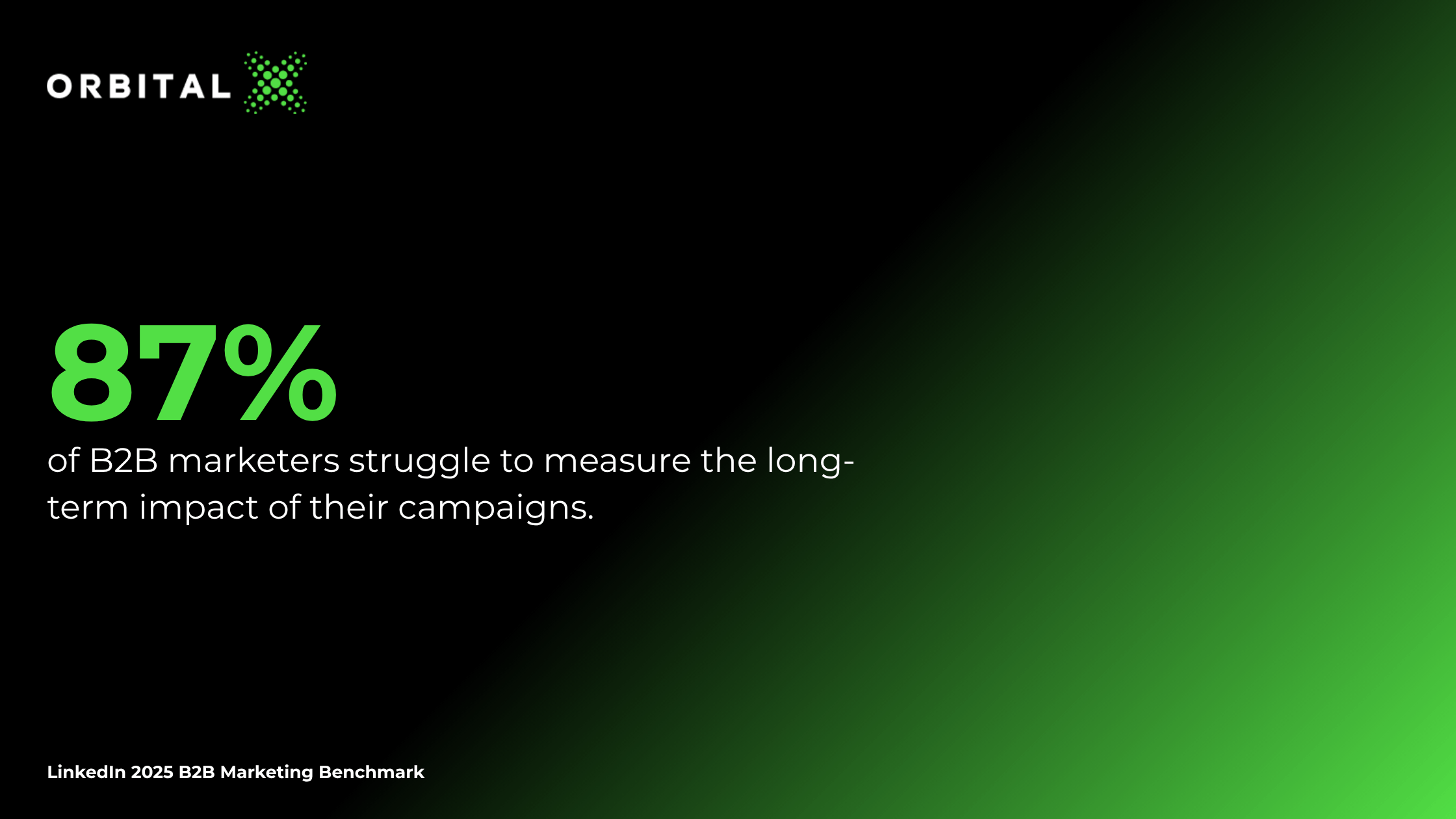
Ask candidates what metrics dominate their standard reporting dashboards. For instance, LinkedIn found that 87% of B2B marketers struggle with measuring long-term campaign impact across extended buying journeys.
 A reliable B2B agency should demonstrate how it tracks buyer progression over long cycles, accounting for multi-channel interactions and giving leadership a practical view of pipeline contribution.
Ask How It Works With Sales
Ask how the agency connects campaign execution with your sales team. If they promise to grow your pipeline but claim they don’t need to speak with your sales reps, you can probably wrap up that pitch early.
Look for a clear process for gathering sales feedback and using it to refine targeting, messaging, and content. Ask how the agency learns which leads become credible opportunities, what objections buyers raise, and what material reps need to move deals forward.
Ask the Right Questions Before You Sign
Use these questions during agency pitch reviews to gauge how candidate teams actually solve problems:
What specific changes would you make to our current marketing execution?
How do you plan to validate and refine our ICP?
What are your operational priorities for the first 90 days, and why?
Which primary metrics dictate whether an engagement is succeeding?
What internal resources and time commitments will you require from our team?
How do you adjust strategy when an initial campaign fails to hit target pipeline goals?
B2B Marketing Agency vs. Consultancy: Which Model Do You Need?
The terms "agency" and "consultancy" aren't rigid categories. A B2B marketing consultancy typically leans toward strategic advice, senior expertise, audits, positioning, and planning, while an agency generally combines strategy with hands-on execution across channels.
They also differ in terms of breadth, as an agency can be full-service, covering multiple connected marketing disciplines, or specialist, focusing deeply on one discipline like ABM, SEO, paid media, content, or demand generation.
Evaluate your internal gaps across strategy versus execution, breadth versus depth, and team capacity. Select the partner model designed to solve your specific commercial bottleneck rather than simply buying the largest agency package available.
Model | Best Suited to | Typical Support |
B2B Marketing Consultancy | Strategic or senior capability gaps | Audits, positioning, GTM strategy, planning, advisory |
Specialist Agency | A specific channel or capability gap | ABM, SEO, paid media, content, demand generation |
Full-Service Agency | Multiple connected marketing needs | Strategy, campaigns, content, channels, operations, reporting |
Hybrid Agency/Consultancy | Businesses needing strategy and execution | Strategic guidance plus hands-on delivery |
Choose a B2B Marketing Consultancy When Strategy Is the Gap
If your business has plenty of execution bandwidth but lacks high-level direction, positioning clarity, or GTM planning, a B2B marketing consultancy is often the right fit. Consultants conduct thorough audits and build strategic roadmaps for your internal team to execute.
Choose a Specialist Agency When One Capability Needs Depth
When your broader marketing operation is running smoothly but a specific discipline (like technical SEO or paid LinkedIn ads) needs advanced expertise, hire a specialist agency. Specialists provide technical depth in one focus area.
Choose a Full-Service Agency When Multiple Functions Need Coordination
If you need strategy, campaign delivery, content creation, paid media, and marketing operations working together as a single engine, a full-service agency is likely the best option. This reduces vendor fragmentation and ensures alignment across all channels.
How Much Does a B2B Marketing Agency Cost?
The cost of hiring a B2B marketing agency varies widely depending on factors like the scope of work and the level of strategic involvement. There’s no standard market rate that applies across every agency or engagement.
However, data from Gartner uncovered that 59% of CMOs don’t have the budget to carry out their marketing strategy. Under such tight budget conditions, you can’t afford to skip any expense details. Evaluating pricing requires looking past headline fees to examine scope, expertise, and expected commercial contribution.
Common B2B Agency Pricing Models
Agencies may structure their fees around ongoing support, defined projects, or specific services:
Monthly Retainers: Fixed monthly fees covering ongoing strategic oversight, campaign management, and execution support against an agreed scope.
Fixed-Scope Projects: Single project fees for defined deliverables with clear timelines, such as positioning projects, website overhauls, or brand strategy.
Strategy or Consulting Engagements: Standalone advisory fees covering audits, GTM planning, and high-level strategy sessions.
Campaign-Based Work: Pricing tied to specific campaign launches, product releases, or time-bound demand initiatives.
Specialist Services: Targeted fees for support in a particular discipline, such as paid media or technical SEO, often charged through a retainer or project fee.
Pricing depends on scope, the number of channels to be used, the level of strategic involvement, creative requirements, technical complexity, and the seniority of the team assigned to your account. An engagement requiring senior strategy, original content, and complex marketing automation will typically require more investment than a narrowly scoped campaign.
How Should You Evaluate the Cost?
Compare agency fees against the cost and practicality of building the capabilities you actually need in-house, including recruitment, onboarding, tools, and ongoing management.
Choosing an agency purely because it’s the cheapest on paper is like bargain-hunting for brake pads. You’re delighted with the savings right up until you need them to work.
A smaller fee can offer excellent value when the scope fits your needs. Ask what’s included, who will deliver it, and whether media spend, software, or production costs sit outside the quote. Judge the investment against the problem the agency is being hired to solve and the outcomes you’ve agreed to measure.
An Agency Has to Earn Its Place
Another agency pitch, another promise to transform your pipeline. Before you sign a contract, make them get specific. Which problem will they solve, who’s doing the work, and how will you know it’s working? Your budget deserves answers with a little more substance than “full-service excellence.”
Want to make the choice easier on yourself? Consider OrbitalX. Our DemandWEBS™ platform connects targeting, content, distribution, and measurement across owned, paid, and earned channels. It gives lean B2B teams a coordinated approach to demand generation, with each part built to support the next and a shared focus on qualified pipeline.
Let’s put your growth plans to work. Book a call with OrbitalX to talk through your priorities, bottlenecks, and what needs to happen next.
FAQs
What does a B2B marketing agency do?
A B2B marketing agency helps businesses plan and execute marketing designed to reach professional buyers and generate commercial opportunities. Its work can include strategy and positioning, demand generation, account-based marketing, content, SEO, paid media, marketing operations, and sales enablement. Depending on the engagement, an agency may provide strategic direction, hands-on execution, or both.
How do I know if my company needs a B2B marketing agency?
An agency can be useful when your business has a capability gap, limited execution capacity, stalled pipeline, a new market to enter, or misalignment between marketing and sales. It can also provide specialist expertise when a particular discipline requires deeper knowledge than the internal team has. Identify the business problem you need external support to address and the capabilities required to make meaningful progress.
What's the difference between a B2B marketing agency and a consultancy?
A B2B marketing agency typically combines strategic thinking with hands-on execution, helping businesses plan, launch, manage, and measure marketing activity. A consultancy tends to place greater emphasis on senior strategic expertise, diagnosis, planning, and advice. The distinction isn't always absolute, as some firms provide both models. The better choice depends on what the business needs from an external partner
How long does it take to see results from a B2B marketing agency?
The timeline depends on factors including the sales cycle, market, starting position, existing demand, channels being used, and scope of the engagement. Some activities can produce early results like engagement, traffic, or qualified conversations, while pipeline and revenue outcomes may take longer to develop. Establish realistic expectations around leading and commercial metrics, determine what can reasonably be assessed at different stages, and adjust activity based on performance.
What should I ask a B2B marketing agency before hiring one?
Ask how the agency would approach your specific commercial challenge, what it would prioritize first, and why. Ask which parts of the work it would own, what it would need from your internal team, and how it measures success. It's also worth asking how it works with sales, how it handles underperforming campaigns, and which relevant experience it can demonstrate.
More Resources

B2B Market Research: Methods, Process, and How to Use It
Learn what B2B market research is, explore key methods and types, and discover how to turn research findings into better business decisions.

B2B Product Marketing: Strategy and Execution
Learn how B2B product marketing connects positioning, GTM, sales enablement, and customer outcomes to drive commercial growth.

Risk Tiers and Bureaucracy? The B2B Guide to Earning Market Trust via the EU AI Act
The EU AI Act explained for business leaders: risk-based AI rules, global scope, and how governance maturity enables compliant, scalable AI adoption.